


OVERFILL PREVENTION
Fire Code Compliance & Specification Guidance
Setting and Meeting Fire Safety Requirements
for Fuel Oil Systems
The safety of fuel oil systems depends on rigorous fire code and expert specification. If your requirements are vague, outdated, or inconsistently specified, dangerous situations can develop fast.
Safety Topic 01
Protecting Your Tank Vent Termination
Storage tank vent lines must terminate in a way that allows the tank to vent while protecting the termination from damage and vandalism.
For Fire Marshals
When reviewing code, confirm the language clearly addresses vent terminations for piping routed inside building walls, including how the line terminates, whether it is protected from damage or vandalism, and whether there is any requirement for containing and sensing oil overflow.
For Engineers
Specifications should describe all safety requirements and physical attributes for the vent termination. Where code applies, the specification may need to clarify installation requirements and overflow detection.
- UL Listed equipment
- Oil-containing reservoir at the termination point
- Monitoring port for detecting overflow during tank filling
- One-piece construction; vandal-resistant face
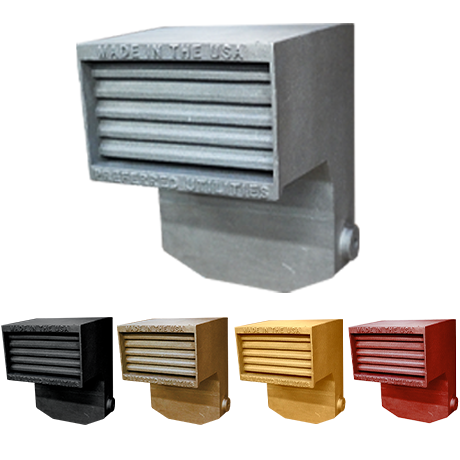
Related Preferred Utilities Product
Tank Vent Brick
Designed as a terminal for storage tank vent lines run inside building walls. Made from a one-piece aluminum casting with a face that matches two stacked standard masonry bricks. Includes an integral oil-containing reservoir and a monitoring port for detecting overflow during tank filling.
Safety Topic 02
Reducing Siphoning Risk
Fuel oil systems should be protected against conditions that could allow oil to siphon from a storage tank. A broken, leaking, or inadvertently open suction line can create a serious fire hazard.
For Fire Marshals
Anti-siphon safety is required by national fire prevention codes under NFPA 30 Flammable and Combustible Liquids Code. Verify that local requirements reference and align with this standard.
For Engineers
Specifications should describe the required anti-siphon function and installation arrangement, including:
- UL Listed equipment
- Automatic shutoff if a suction line breaks, leaks, or is left open
- Installation at the highest point in the suction line
- Sizing to meet fuel flow requirements of the system and piping
.png)
Related Preferred Utilities Product
Model A Anti-Siphon Valve
Designed to automatically shut off oil flow if a suction line breaks or is inadvertently left open. Required by many codes and recommended on all installations where the highest level of oil in storage is above the boiler room floor.
Safety Topic 03
Preventing Overfill in a Direct-Fill Tank
Direct-fill tanks should include safeguards that reduce the risk of overfilling during fuel delivery.
For Fire Marshals
When reviewing code, confirm the language clearly addresses the required overfill prevention sequence: when local audible and visual alarms must activate, when filling must be controlled or stopped, how leak detection is monitored, and what alarm response is required.
For Engineers
Specifications should describe the required overfill prevention and leak detection functions, including:
- Audible and visual alarm when tank reaches maximum fill level
- Valve closure when tank reaches a dangerous level
- Audible and visual alarm activation and valve closure if a leak is detected
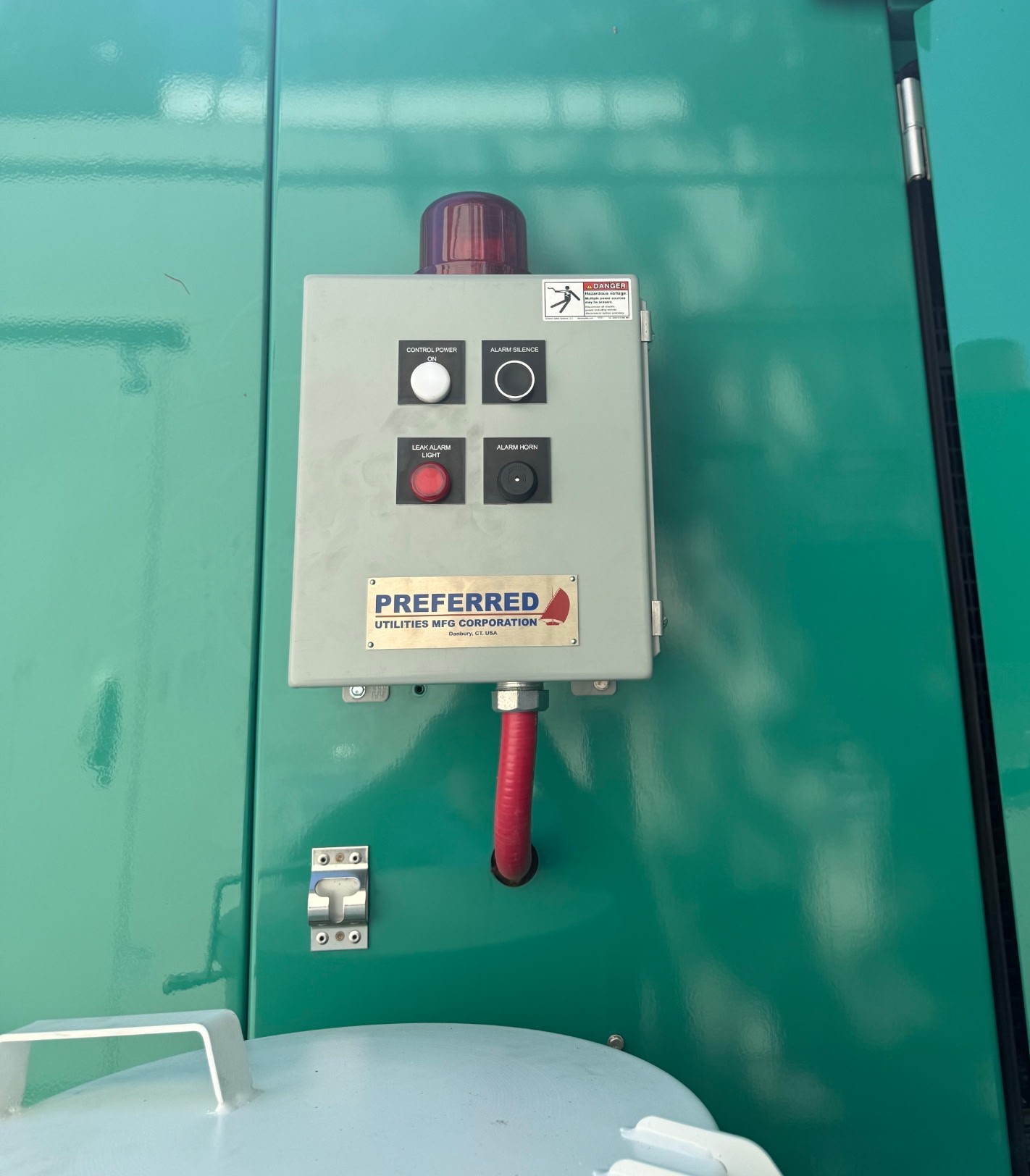
Related Preferred Utilities Product
Model 226-FV Direct-Fill Tank Controller
Provides overfill and leak protection for single- and double-wall tanks. Activates a horn and strobe at 90% capacity, closes a solenoid valve in the fill line at 95% capacity, and triggers an alarm if a leak is detected.